DeFi's "Safety" Tokens: Mirage or Oasis?
DeFi's Post-Crash Shuffle: Are "Safe" Tokens Really Safer?
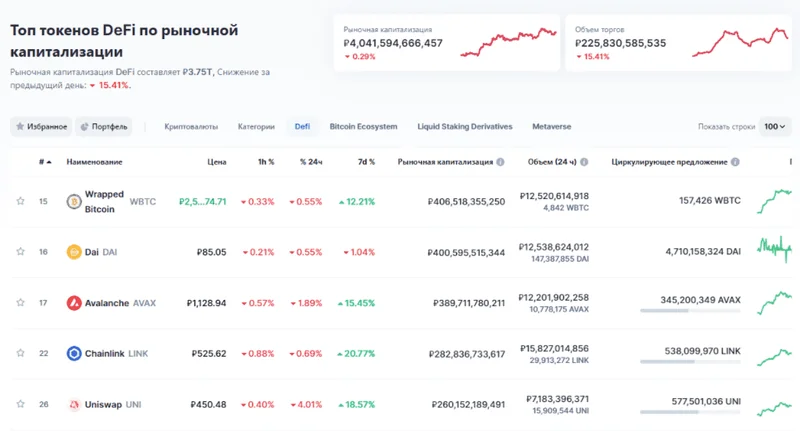
The DeFi landscape is still feeling the aftershocks of that October crash. FalconX's report paints a picture of a sector struggling to regain its footing, but with some interesting shifts in investor behavior. The headline? As of November 20th, only 2 out of 23 leading DeFi tokens are positive year-to-date. That's a brutal 37% average drop for the quarter. Ouch.
But averages can be misleading. The report highlights a flight to perceived safety: tokens with buyback programs (HYPE, CAKE) and those with "fundamental catalysts" (MORPHO, SYRUP) are outperforming the broader market. The idea is that buybacks provide a price floor, and unique growth drivers offer resilience. The question, though, is whether this "safety" is real or just a mirage in a volatile market.
The data on lending sector dynamics is particularly intriguing. Lending and yield names are "more expensive" on a multiples basis because their prices haven't fallen as much as their fees. KMNO, for example, saw its market cap drop 13%, while fees cratered 34%. Investors might be crowding into lending, viewing it as "stickier" than trading activity. Is this rational, or are they simply underestimating the risks in a supposedly stable sector? It's like thinking a bond is safe just because it's *called* a bond.
Then there's the Solana situation. The Solana blockchain is touted for its high throughput and low transaction costs, with over 1,000 transactions per second. SOL's utility is primarily as a utility token for transaction fees and staking, not as a speculative instrument alone. But, is that really true? Solana's ecosystem is heavily influenced by meme coin trading, which, while demonstrating its scalability, also raises questions about long-term stability.
Solana's network metrics look solid: 1,295 active validators, 1,100 average TPS, and 99.9% uptime. But high throughput comes at a cost. The elevated hardware requirements (multi-core CPUs, large memory, high disk I/O) raise the barrier to entry for validators, potentially leading to centralization. Is Solana truly decentralized, or is it a high-speed network controlled by a relatively small group of well-capitalized operators?
The tokenomics are also worth a closer look. While 60% of the SOL supply is allocated to the community and staking rewards, a significant chunk (almost 30%) is held by founders, the team, and early investors. This distribution creates a potential for selling pressure, especially as vesting schedules unlock more tokens.
Speaking of staking, around 70% of the SOL supply is staked, reducing circulating supply and supposedly supporting market stability. But the annual inflation rate (around 8%, gradually decreasing) could offset these gains if network adoption stalls. Is staking a genuine driver of long-term value, or just a way to mask underlying inflationary pressures?
And this is the part of the analysis that I find genuinely puzzling. The "Best Crypto to Buy" lists are still pushing Solana and XRP as "established" options, citing ETF speculation and "institutional treasury allocations." But these endorsements often lack a critical eye. For example, one analysis points to XRP's "95% ETF approval odds" and "300+ banking partnerships." But it also admits that "policy reversals" and "large holder sell-offs" are key risks. That's hardly a ringing endorsement.
The CRO (Cronos) price predictions are even wilder. One forecast sees CRO reaching $2.56 by 2031. To be more exact, the forecast predicts a maximum price of $2.56 and an average price of $2.19. Seriously? That would require a massive increase in market capitalization. The same analysis acknowledges that it's "unlikely" that CRO will ever reach $100. But it still pushes the $2.56 target. It's like saying, "This stock probably won't go up, but if it does, it'll go up a lot!"
So, What's the Real Story?
The DeFi market is in a state of anxious reshuffling, not a confident recovery. Investors are chasing "safe" tokens, but the data suggests that this safety is often illusory, based on superficial metrics like buyback programs rather than genuine fundamental strength. The long-term forecasts, particularly for altcoins like CRO, are detached from reality. It's a market driven by hope and speculation, not sober analysis.